
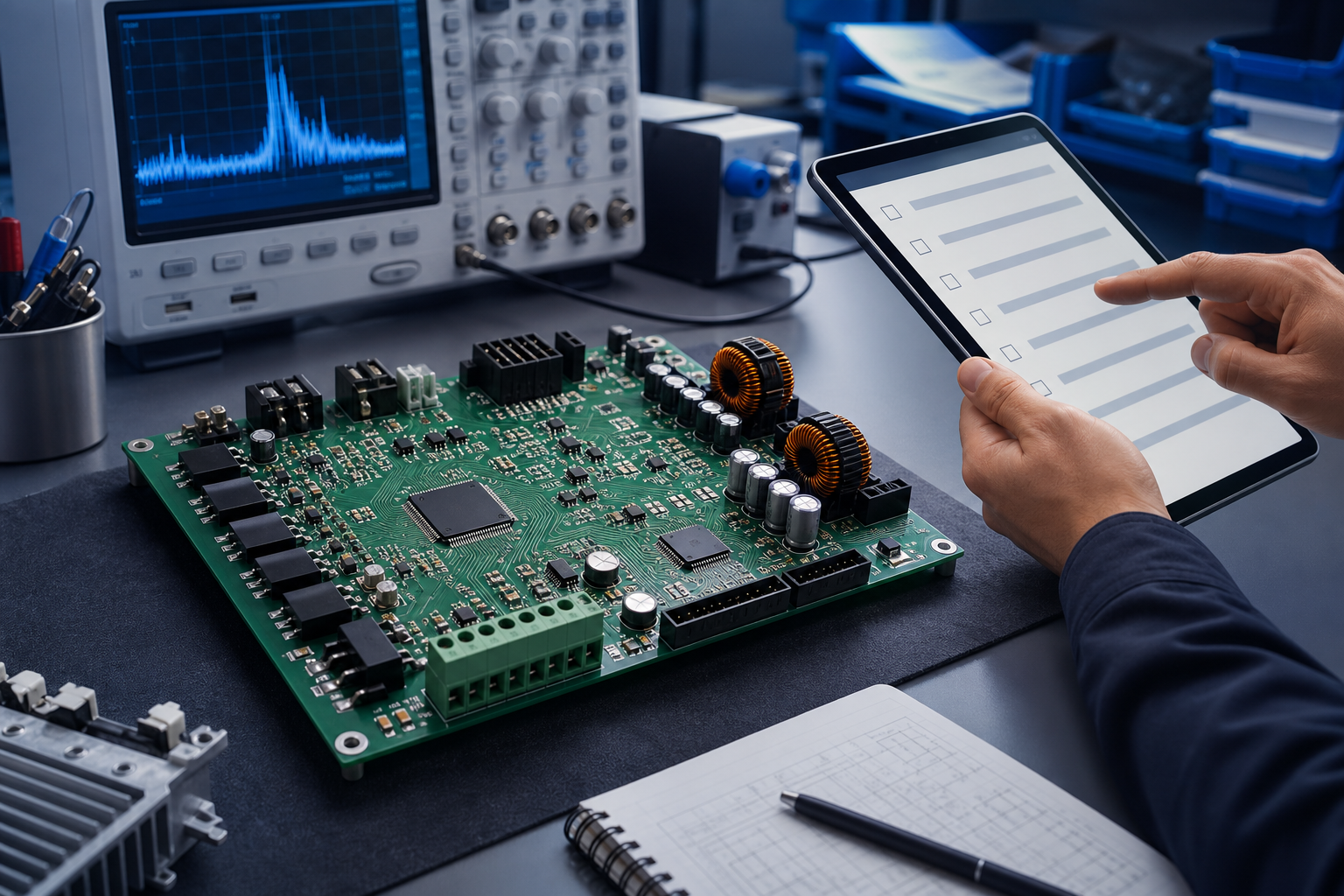
Developing an electronic product for the United States or Canada requires more than a functional schematic and a finished PCB assembly. Compliance planning, material selection, electromagnetic compatibility and production consistency should be considered early—before the design reaches volume production.
This guide explains how OEMs and product developers can prepare a custom PCBA project for North American market requirements, with particular attention to FCC compliance and UL-recognized materials.
Start With the Intended Product and Market
The compliance path depends on the complete end product, its functions and how it will be used. A motor control board, industrial controller, wireless sensor and consumer device may be subject to different requirements. Before schematic design or PCB layout begins, define:
- The countries where the finished product will be sold
- Whether the product intentionally transmits radio signals
- Clock frequencies, switching frequencies and communication interfaces
- Input voltage, output power and connected loads
- Enclosure materials and environmental conditions
- Applicable industry or customer standards
These details influence component selection, board layout, filtering, shielding, grounding and the final verification plan.
What FCC Compliance Means for Electronic Products
The U.S. Federal Communications Commission regulates radio-frequency devices. Depending on the device, an authorization procedure may be required before the finished product is marketed or imported into the United States. Products containing radios such as Bluetooth, Wi-Fi or other transmitters commonly require certification, while many digital devices and switching electronics must still meet applicable limits for unintentional emissions.
The exact procedure should be confirmed for the finished product with a qualified test laboratory or compliance specialist. A PCBA supplier can support the process by designing for electromagnetic compatibility and preparing prototypes for pre-compliance and formal testing, but a component or bare PCBA does not automatically make the complete product FCC compliant.
Design Practices That Support FCC Testing
- Control high-current switching loops: Keep fast switching paths compact and place decoupling components close to the devices they support.
- Plan the ground structure: Use continuous reference planes where practical and carefully manage return-current paths.
- Protect external interfaces: Consider filtering, common-mode chokes, transient protection and connector placement for cables that may act as antennas.
- Separate sensitive and noisy circuits: Keep analog sensing, communication and control sections away from high-power switching nodes.
- Allow for debugging: Reserve practical locations for optional filters, shielding connections and test points.
- Test early: Pre-compliance scans on a representative prototype can reveal problems before tooling and production commitments.
Understanding UL-Recognized Materials and Yellow Cards
A UL Solutions Yellow Card is a material information record associated with a UL Recognized Component. It lists tested safety and performance properties for a specific material, which may include flammability, electrical, thermal and mechanical characteristics. UL-recognized PCB materials and polymeric components can help product developers document material properties and support the certification path for a finished product.
However, a Yellow Card applies to the identified material and conditions shown in its record. It is not the same as UL certification of the complete end product. The relevant manufacturer, material grade, thickness, colour and performance ratings should be checked against the project requirements.
Information to Request for Your PCBA Project
When certification or customer approval is important, include the documentation requirements in the quotation and engineering specification. Useful items may include:
- PCB material manufacturer, grade and applicable UL recognition
- Flammability rating and minimum qualified thickness
- Critical component manufacturer and part number controls
- BOM revision and approved substitution process
- PCB fabrication and assembly inspection records
- Prototype test reports and production test requirements
- Traceability requirements for critical materials or batches
Avoid Late Compliance Redesigns
Compliance problems become more expensive when they are discovered after enclosure tooling, purchasing and production preparation. The most effective approach is to include target-market requirements in the first technical review, then confirm them again during schematic review, PCB layout, prototype testing and production release.
For wireless products, the choice between a pre-certified radio module and a custom RF design can significantly change the testing scope. For motor drives and industrial controllers, switching frequency, power stage layout, cable length and grounding often deserve early attention.
How MaxMait Supports North American Projects
MaxMait Electronics provides product development and production capabilities for custom PCBA, motor control boards, industrial controllers and embedded systems. Our Canada office coordinates North American customer communication and project requirements.
According to each project’s needs, we can support FCC compliance preparation, prototype builds, design-for-EMC review, testing coordination and the specification of UL-recognized materials or components with applicable UL Yellow Card documentation.
Planning a new electronic product for the United States or Canada? Share your application, specifications, expected quantity and target certification requirements with our engineering team.
Official References
This article provides general engineering information and is not legal or certification advice. Requirements should be confirmed for the specific finished product and target market.